Start your journey now.
Why Indonesia Can Be a Spiritual Haven
For those seeking a land where Islam is lived, Indonesia offers a unique and diverse environment for a geographical hijra—moving to a place where faith, community, and daily life harmonize. With over 270 million people and more than 17,000 islands, this archipelago combines spiritual richness with natural wonder, making it both inspiring and challenging for Muslims seeking a devoted life.
A Nation Rooted in Faith
Indonesia is the largest Muslim-majority country in the world. Islam is a central part of daily life, shaping culture, festivals, and community practices. Mosques are abundant, offering regular prayers, Qur’an study, and community programs. Many cities and towns host Islamic lectures after Subh and Maghrib, creating opportunities for spiritual growth and communal learning.
Vast Spaces and Natural Beauty
Unlike Malaysia’s compact towns, Indonesia is defined by contrasts. While cities like Jakarta, Surabaya, and Medan are densely populated and bustling, much of the country remains open and pristine. Remote islands, quiet beaches, and lush forests provide spaces for reflection, meditation, and a life closer to nature. These empty spaces allow for a life away from distractions, fitnah, and urban chaos—perfect for those seeking spiritual solitude and peace.
Challenges to Navigate
Life in Indonesia requires awareness and adaptation. Overpopulation in major cities brings congestion, higher living costs, and increased social challenges. Safety can be a concern, particularly regarding petty crime or security risks such as highjackings in certain areas. While Islamic life is vibrant, access to English-speaking communities and modern services is far more limited compared to Malaysia, which may be a consideration for new Western reverts.
Affordable Life and Community Living
Despite some urban challenges, the cost of living can be quite affordable, especially outside major cities. Traditional towns and villages offer tight-knit communities where Islamic values are central. In these areas, you can live humbly yet comfortably, enjoy halal food, attend local Islamic centers, and participate in communal activities that nurture faith and moral living.
Islamic Sites and Cultural Heritage
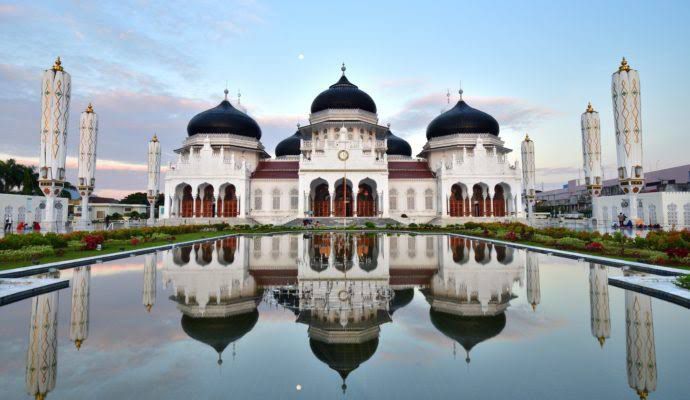
Indonesia is rich with Islamic history and culture. From ancient mosques in Aceh to Islamic universities in Java and Sumatra, there are abundant opportunities to study, engage, and practice Islam. Festivals, Qur’anic competitions, and Islamic community events provide spiritual enrichment and connection with fellow Muslims across generations.
Safe Havens Amid Diversity
While some areas require vigilance, Indonesia also offers many safe and quiet regions where one can live a pure, focused life. Islands like Lombok, Sumatra’s rural areas, and parts of Kalimantan provide a slower pace, fewer temptations, and opportunities for genuine spiritual focus. Here, you can balance the rhythm of faith with the beauty of nature and the simplicity of life.
Integration and Daily Life
Life in Indonesia emphasizes practical spirituality. Markets, mosques, and schools follow Islamic principles, and daily routines naturally accommodate prayer and religious observances. While English is less commonly spoken, local communities are generally welcoming and supportive, and learning Bahasa Indonesia can open doors to meaningful relationships and participation in daily Muslim life.
Why Western Reverts Can Thrive
For new converts, Indonesia offers a living example of Islam shaping society at a large scale. Though adapting to local language and customs is necessary, the opportunity to immerse oneself fully in Muslim-majority culture, witness Islamic practices in daily life, and experience a wide range of spiritual and communal activities makes Indonesia a profound choice for those seeking a full geographical hijra.
Indonesia vs. Malaysia: A Choice for Your Hijra
While Malaysia offers ease of integration, widespread English fluency, and well-structured towns, Indonesia presents a different but equally profound opportunity. Here, the vastness of the archipelago allows for quiet islands, empty beaches, and spaces for deep reflection—something rare in densely packed Malaysia. The spiritual richness of everyday life, the abundance of mosques, and vibrant Islamic communities exist alongside challenges that test patience and adaptability, teaching resilience and humility. For those willing to immerse themselves fully, learn the language, and navigate local realities, Indonesia offers a life where faith, nature, and communal living intersect in ways few countries can match.
Got it 👍 You want a
🌍 Indonesia: A Destination for Spiritual Hijrah
1. Immigration & Legal Aspects
Visa Options: Indonesia does not currently offer a “hijrah” or refuge status. Foreigners usually enter through:
Tourist Visa (30–60 days, extendable).
Social & Cultural Visa (Visa Sosial Budaya), sponsored by an Indonesian citizen or organization.
KITAS (Limited Stay Permit), often for work, study, or family.
KITAP (Permanent Stay Permit) after several years of legal stay.
Constraints: Indonesia has no refugee status, and strict immigration enforcement exists. Long-term residency requires sponsorship, investment, or marriage.
—
2. Political & Religious System
Indonesia is a Republic with a president, not a monarchy.
It has the largest Muslim population in the world (~87% of 275M people).
Shariah law is applied in Aceh Province fully (hudud punishments, Islamic governance). In other provinces, it is more symbolic (halal standards, Islamic dress encouragement, family law for Muslims).
—
3. Cities & Locations for Spiritual Hijrah and Retreat
Indonesia offers both crowded urban centers and peaceful, nearly untouched islands. Perfect for those seeking retreat and spiritual living.
Aceh (Banda Aceh): The only province with full Shariah. Quiet, conservative, and strongly Islamic. Mosques everywhere. Affordable life.
Yogyakarta: Known as the cultural and intellectual heart of Java. Affordable, full of pesantren (Islamic schools), universities, and a strong religious atmosphere.
Bogor: Cooler climate, many Islamic study circles, close to Jakarta but calmer.
West Java (Bandung, Tasikmalaya, Garut): Strong Islamic traditions, pesantren hubs, affordable living.
Makasar & South Sulawesi: Coastal retreat cities, active Islamic da’wah scene.
Lombok (“The Island of 1,000 Mosques”): A natural paradise with strong Islamic identity, quieter than Bali, very suitable for retreat.
Smaller Islands (Sumatra, Maluku, Riau): Some nearly untouched spaces for a quiet hijrah life, though infrastructure is less developed.
💰 Living Costs:
Small towns: USD 300–500/month (basic lifestyle).
Cities like Jakarta/Bandung: USD 600–900/month (moderate lifestyle).
Retreat islands (Lombok, Riau): USD 400–700/month (depending on housing).
—
4. Islamic Studies
Indonesia has a huge network of pesantren (Islamic boarding schools) and major Islamic universities.
UIN (Universitas Islam Negeri) Jakarta, Yogyakarta, Bandung – largest Islamic universities.
Gadjah Mada University (UGM), Yogyakarta – strong humanities & Islamic studies programs.
Pesantren Gontor (Ponpes Gontor) – world-famous Islamic boarding school.
IAIN & STAIN – Islamic State Institutes across provinces.
Fees: Generally much cheaper than Malaysia. Undergraduate tuition at state Islamic universities: USD 500–2,000/year. Living costs for students: USD 200–400/month.
—
5. Culinary Traditions
Indonesia is a culinary paradise, with halal food widely available. Eating is affordable almost everywhere.
Concepts:
Warung → small family-run eateries, very cheap.
Kaki Lima (Street Food Carts) → quick, affordable snacks and meals.
Food Courts (Pujasera) → clusters of different stalls, like Malaysia’s food courts.
Famous Dishes:
Nasi Goreng (fried rice, $1–2).
Sate Ayam (chicken skewers with peanut sauce, $1–2 per portion).
Gado-Gado (vegetable salad with peanut sauce, $1–1.5).
Rendang (spicy beef stew, $3–5).
Soto Ayam (chicken soup, $1–2).
💰 Restaurant Prices:
Street food: $1–2/meal.
Warung meals: $2–4.
Mid-range restaurant: $5–10/person.
—
6. Transportation
Public: Buses, trains (Java & Sumatra), minibuses (angkot), ferries between islands.
Private:
Grab & Gojek (like Grab in Malaysia) for cars, motorbikes, and even food delivery.
Affordable domestic flights between islands.
Major Terminals:
Jakarta (Soekarno-Hatta International Airport).
Surabaya (Juanda Airport).
Yogyakarta International Airport.
Bali (Ngurah Rai Airport).
Large train stations: Jakarta (Gambir, Pasar Senen), Yogyakarta (Tugu), Surabaya (Gubeng).
—
7. Strengths & Limitations for Hijrah
✅ Strengths:
Largest Muslim population in the world.
Deep Islamic traditions, pesantren culture.
Many untouched, quiet places for retreat.
Affordable cost of living.
Vibrant da’wah and Islamic activities.
⚠️ Limitations:
Big cities (Jakarta, Surabaya) are overcrowded, polluted, with high poverty levels.
English is not widely spoken outside academic and elite circles.
Some regions have petty crime issues (motorbike theft, scams).
Infrastructure weaker than Malaysia (healthcare, transport in rural areas).
Summary:
Indonesia is a land of contrast—from overpopulated cities to nearly empty islands. It is affordable, deeply Islamic, and rich in study opportunities. For a Muslim seeking spiritual hijrah, Indonesia offers everything: quiet retreat in Lombok or Aceh, intellectual pursuit in Yogyakarta or Bandung, and vibrant da’wah in Java and Sulawesi.
🌿 Best Retreat Locations in Indonesia for Spiritual Hijrah
1. Aceh (Banda Aceh & Surroundings)
Why: Only province with full Shariah law; conservative society, mosques everywhere, Qur’an recitation in public life.
Atmosphere: Strong Islamic identity, peaceful after sunset, limited nightlife (good for avoiding fitnah).
Nature: Beaches, mountains, and the famous Pulau Weh (quiet island, crystal waters).
Cost of Living: Very affordable – USD 350–500/month.
—
2. Yogyakarta (Central Java)
Why: Known as Indonesia’s cultural and intellectual heart; strong pesantren network and Islamic universities.
Atmosphere: Balanced between tradition and modernity, vibrant Islamic study circles, yet relaxed lifestyle.
Nature: Surrounded by volcanoes (Mount Merapi), rice fields, and historic Islamic sites.
Cost of Living: USD 400–600/month for modest living.
—
3. Lombok (West Nusa Tenggara)
Why: Called “The Island of 1,000 Mosques.” Far more Islamic than nearby Bali.
Atmosphere: Calm, slow-paced, strong Islamic identity. Many villages still very traditional.
Nature: White beaches, Mount Rinjani, waterfalls. Ideal for seclusion and spiritual reflection.
Cost of Living: USD 400–700/month, depending on coastal or rural area.
—
4. Bogor (West Java)
Why: Close to Jakarta but cooler, greener, and calmer; famous for Islamic lectures and study groups.
Atmosphere: “The City of Rain,” lush and quiet, a hub for da’wah movements.
Nature: Botanical gardens, hills, waterfalls nearby.
Cost of Living: USD 500–700/month; slightly higher due to proximity to Jakarta.
—
5. Bandung & West Java Highlands
Why: Large network of pesantren, historically an Islamic hub. Known as the “Paris of Java” but with strong Muslim communities around.
Atmosphere: Cooler weather, intellectual climate, many family-friendly communities.
Nature: Mountains, tea plantations, volcanic lakes.
Cost of Living: USD 400–650/month.
—
6. Tasikmalaya (West Java)
Why: Known as “Kota Santri” (City of Students of Islam). Thousands of pesantren, deeply religious environment.
Atmosphere: Quiet, traditional, less urbanized, ideal for a disciplined hijrah lifestyle.
Nature: Hills, rivers, traditional Javanese landscapes.
Cost of Living: Very cheap – USD 300–500/month.
—
7. Makassar (South Sulawesi)
Why: Coastal city with strong da’wah activities and Islamic universities.
Atmosphere: Busy but still strongly Islamic, with an active intellectual climate.
Nature: Access to islands, coral reefs, and seaside retreats.
Cost of Living: USD 400–600/month.
—
8. Malang (East Java)
Why: University town with growing Islamic da’wah culture.
Atmosphere: Cooler climate, less hectic than Surabaya or Jakarta, many pesantren.
Nature: Surrounded by volcanoes, waterfalls, green hills.
Cost of Living: USD 400–600/month.
—
9. Riau Islands (Batam, Bintan)
Why: Closer to Singapore, but still with Islamic life. Quieter islands offer retreat options.
Atmosphere: Mix of urban and rural, with pockets of calm fishing villages.
Nature: Beaches, mangroves, island hopping.
Cost of Living: USD 450–700/month.
—
10. Padang (West Sumatra)
Why: Home of the Minangkabau, known for their strong Islamic traditions.
Atmosphere: Culturally rich, Islamic family values are strong, pesantren are widespread.
Nature: Coastal city with access to mountains and Mentawai Islands.
Cost of Living: USD 350–550/month.
—
🕌 Summary
For Muslims seeking quiet retreat and spiritual hijrah, Indonesia offers:
Aceh (for strict Shariah).
Lombok & Tasikmalaya (for simplicity and seclusion).
Yogyakarta & Bandung (for intellectual and spiritual growth).
Smaller islands (for solitude and natural beauty).
💰 Average modest lifestyle budget: USD 400–600/month, much cheaper than Malaysia.
 Roots of Hijra